ROTTING MIDTONES
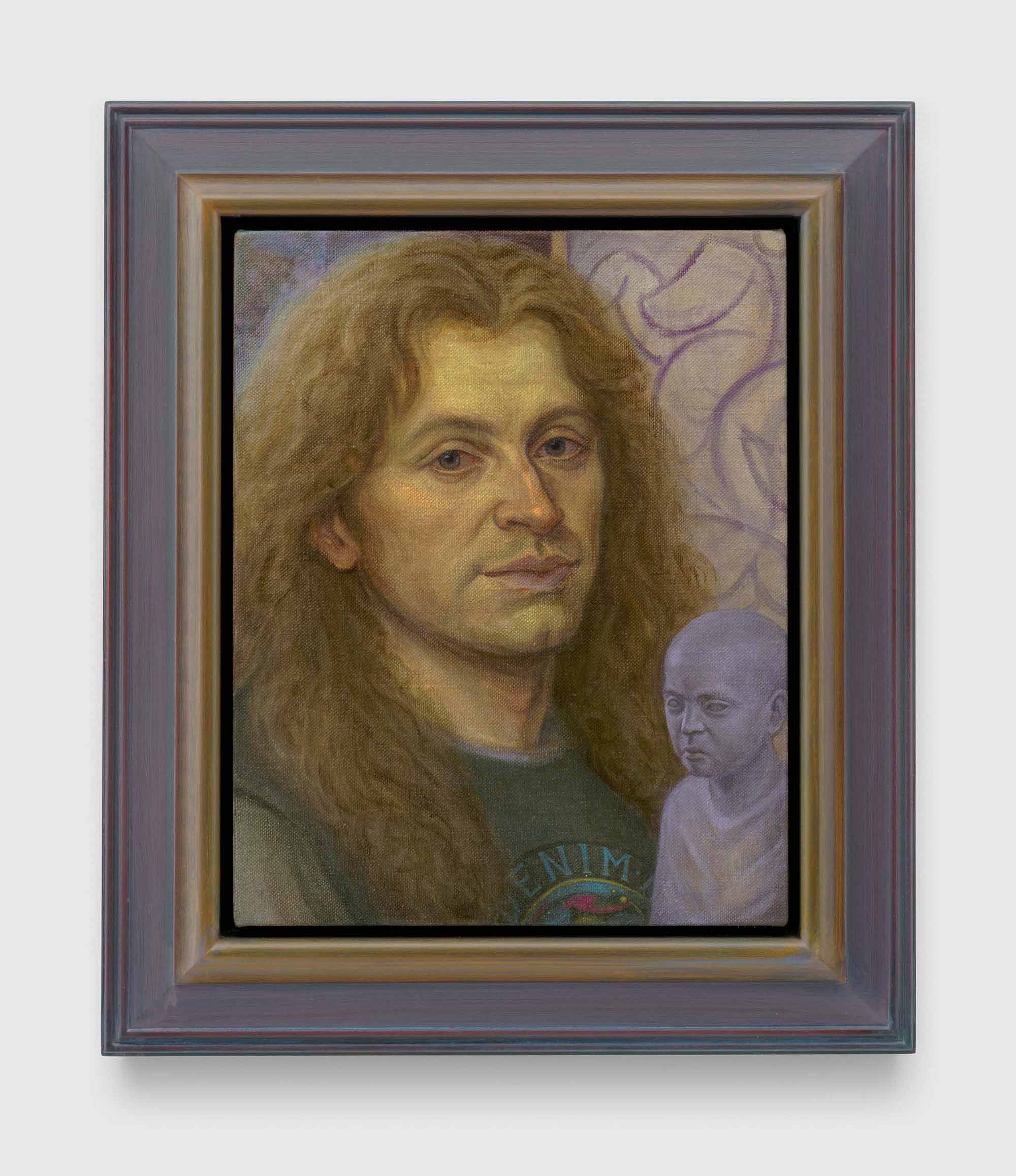
The first thing I wrote down when I left Steven Shearer’s studio was the word inbred. It is not an especially generous word, and certainly not one I expected to find myself using in relation to a group of paintings. I had visited the studio several months before the opening of the exhibition My Moody Muse at David Zwirner, London, expecting, as one often does before a major show, to encounter a body of work that would gradually disclose its organizing principle. I found myself distracted by a recurring and slightly uncomfortable impression of family degeneracy. Looking around the room, I kept noticing the same faces.
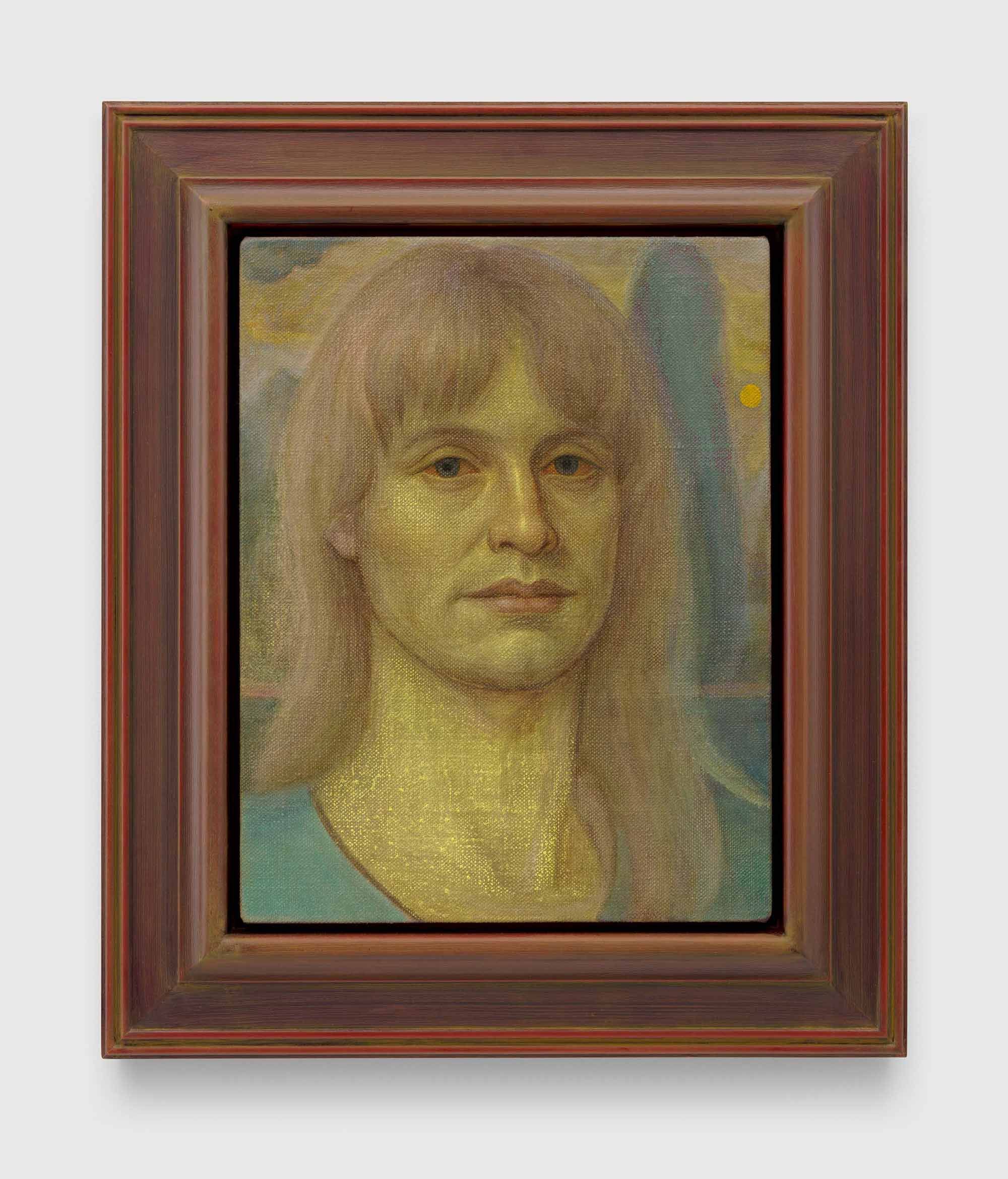
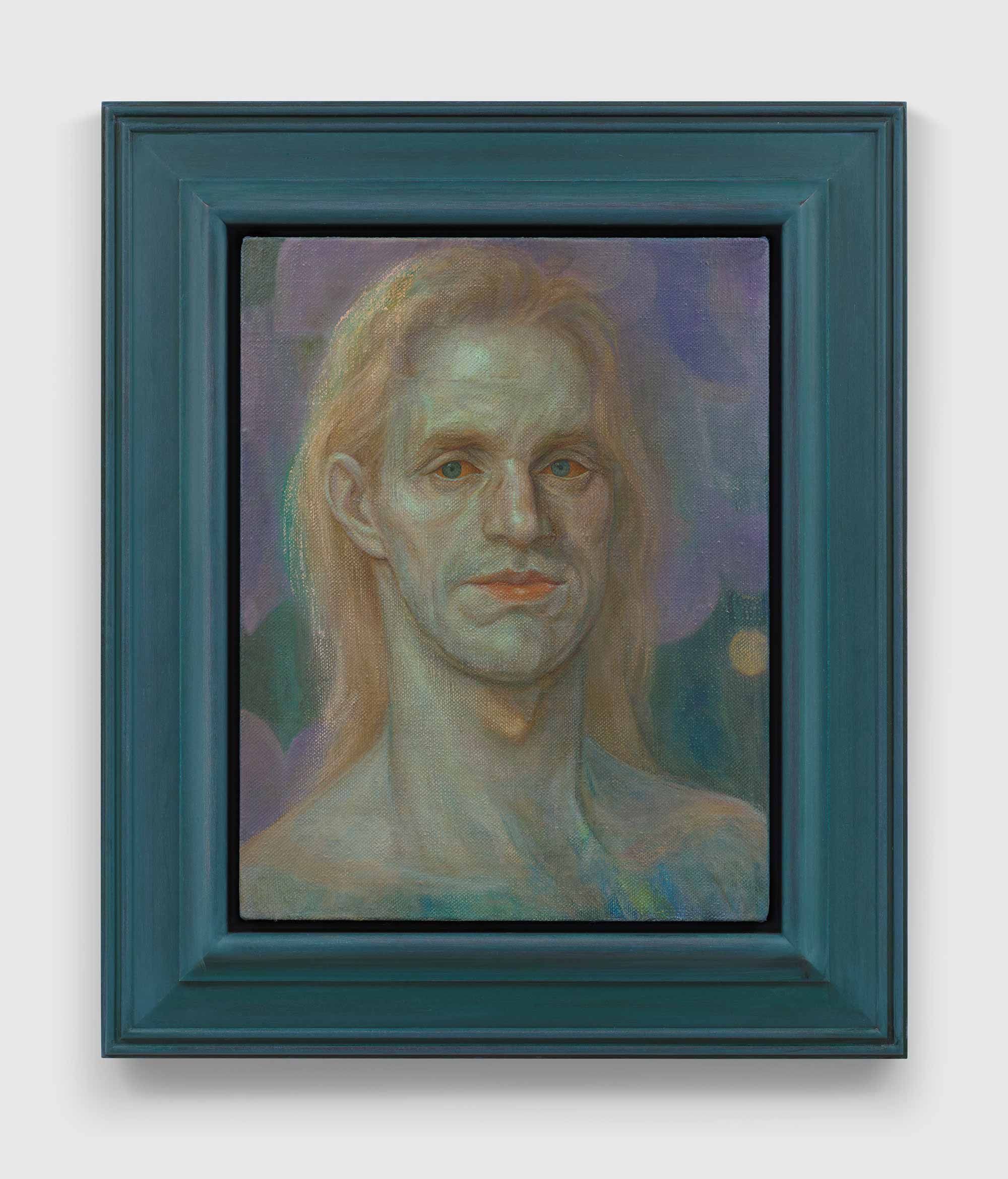
Not literally the same faces, of course, but faces that seemed to belong to the same troubled bloodline. A familiar forehead here, a jawline there, a particular droop around the eyes, a similar cascade of long, swooping hair, at times thick and flowing, at other moments thinning and threadbare. Features migrated from painting to painting. Expressions resurfaced in altered form. It felt as though some obscure hereditary logic structured Shearer’s paintings, as if all of them were descended from a common ancestor. A Baroque composer morphed into a suburban metalhead, a fallen angel returned as a punk. Each belonged to a different era and social world, but they all appeared to share the same family traits. Inbred. I underlined the word in my notebook.
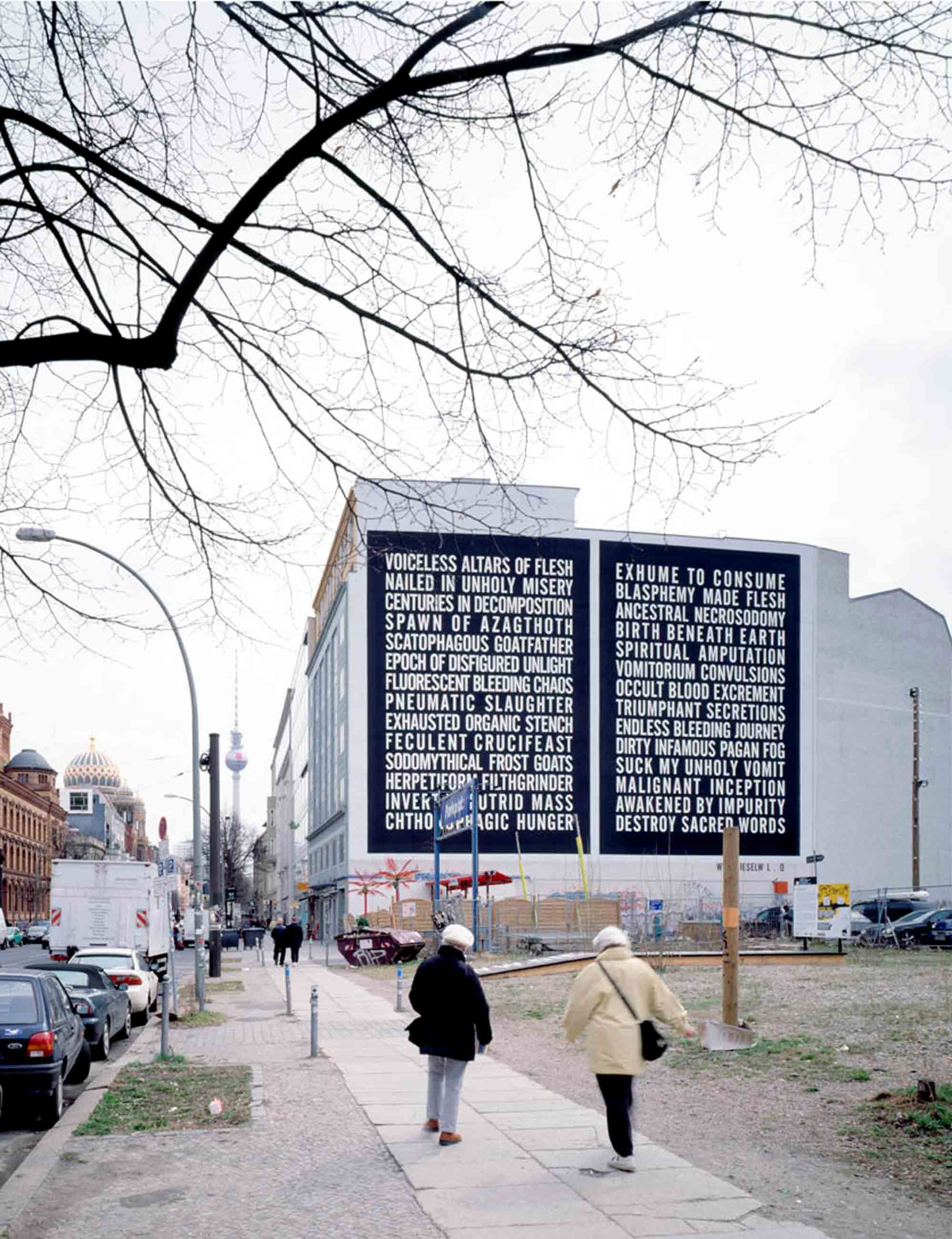
I had never seen Shearer’s paintings in person. My first encounter with his work came through his assemblages of found images of long-haired rockers, sleeping figures, and fragments of subcultural iconography arranged into associative groupings. I was particularly drawn to his billboards of sleeping figures. I thought about them even more after the public billboards installed for Vancouver’s 2021 Capture Photography Festival were removed only two days after they appeared, following complaints that they resembled dead people. Earlier billboards paired the song titles of death and black metal bands with lines from Shearer’s own poems, producing an incantatory, mannerist language of their own: “VOICELESS ALTARS OF FLESH / NAILED IN UNHOLY MISERY / CENTURIES IN DECOMPOSITION / SPAWN OF AZAGOTH [...].” None of these public works showed his paintings.
Although Shearer maintained a studio in Vancouver, his paintings were rarely exhibited there. Curators tended to favour the collage and assemblage works, so I knew the paintings only through reproduction. Their technical skill seemed almost anomalous within the broader practice. Upon discovering them, I was surprised—though this now feels like a somewhat naïve assumption—that someone so closely associated with found imagery would also paint with such assurance, as if the two practices did not quite belong to the same hand. Without really thinking about it, I had assumed that conceptual work and painterly facility belonged to different aesthetic commitments: the former aligned with critique and deskilling, the latter with mastery and a lingering belief in the artist's hand. That degree of technical proficiency seemed almost anachronistic, a remnant of another era, though I had no real sense of what it would amount to in person.
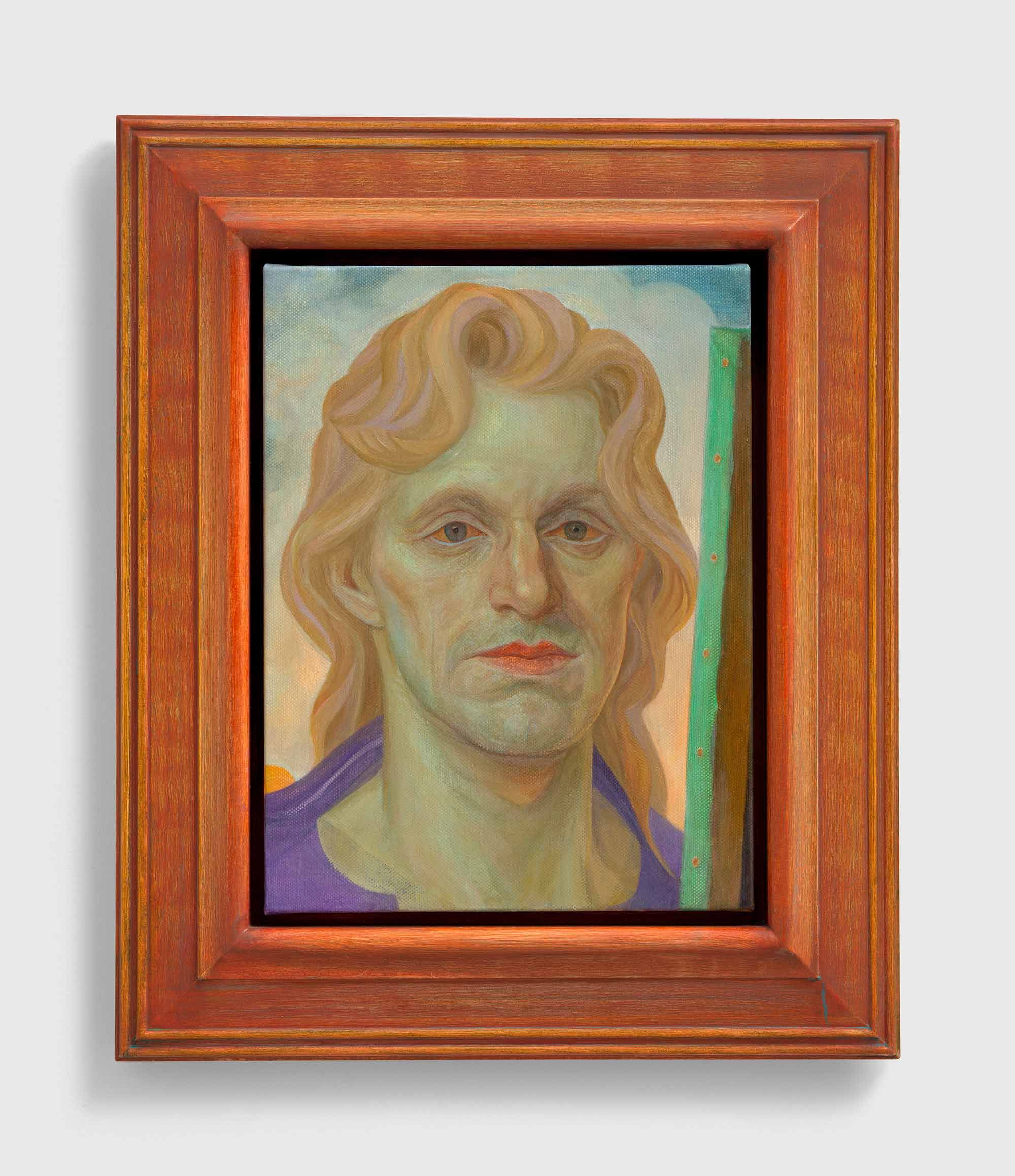
The question is a strange one: what would it mean for a painting to be inbred? The line sounds absurd until one spends time with the work. It does not take long to notice the symptoms linking these figures. Place Morning Fantasist (2022) beside Manfred in Character (2022) and they look less like two individuals than two versions of the same person, one slightly worn down by time. The first signs of decline register in the hair. Thick hair gives way to something thinner and stringier, as though whatever affliction is at work has finally reached the surface. I found myself wondering how forms survive at all. In these paintings, survival appears bound up with physical deterioration. It is as though an obscure hereditary illness were at work, with gestures and other symptomatic marks outliving the bodies that first carried them and resurfacing generations later, as though no image ever fully forgets its earlier life.
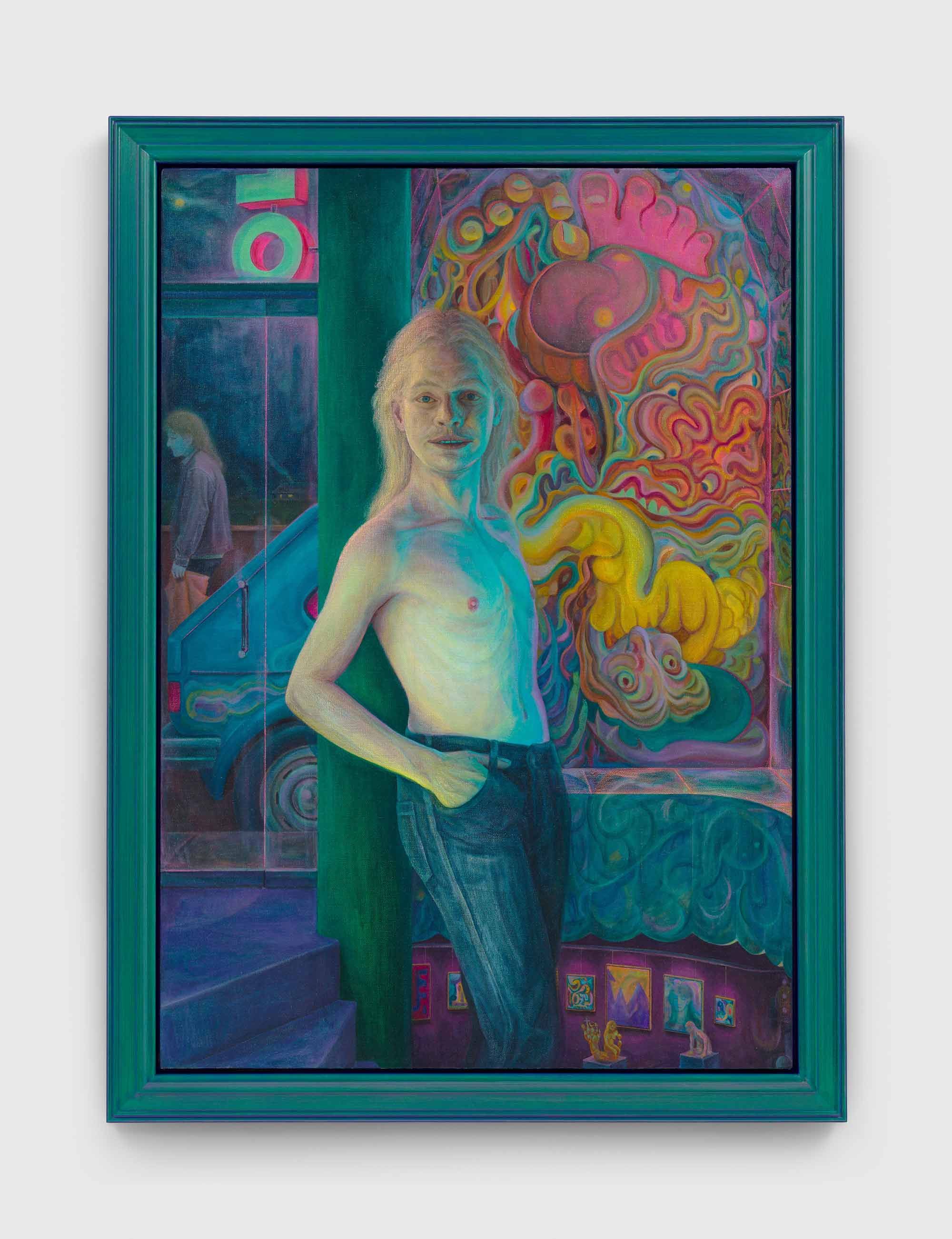
The paintings draw from a small but unusually productive pool of forms. Faces inherit from faces. Bodies from other bodies. Looking around the studio, I sometimes had the feeling that the works were producing their own descendants. You could almost build a family tree. Expressions and gestures return after long absences, slightly altered, as though they had passed through other lives in the meantime. I kept thinking about The Underground Exhibitor: a shirtless, long-haired man dressed in denim descending a spiral staircase into an underground gallery glowing with the vibrant colours of seventies psychedelia. It is unclear whether the exhibitor is an artist or a curator. In either case, the staircase leads to a gallery of his own making, a world within a world.
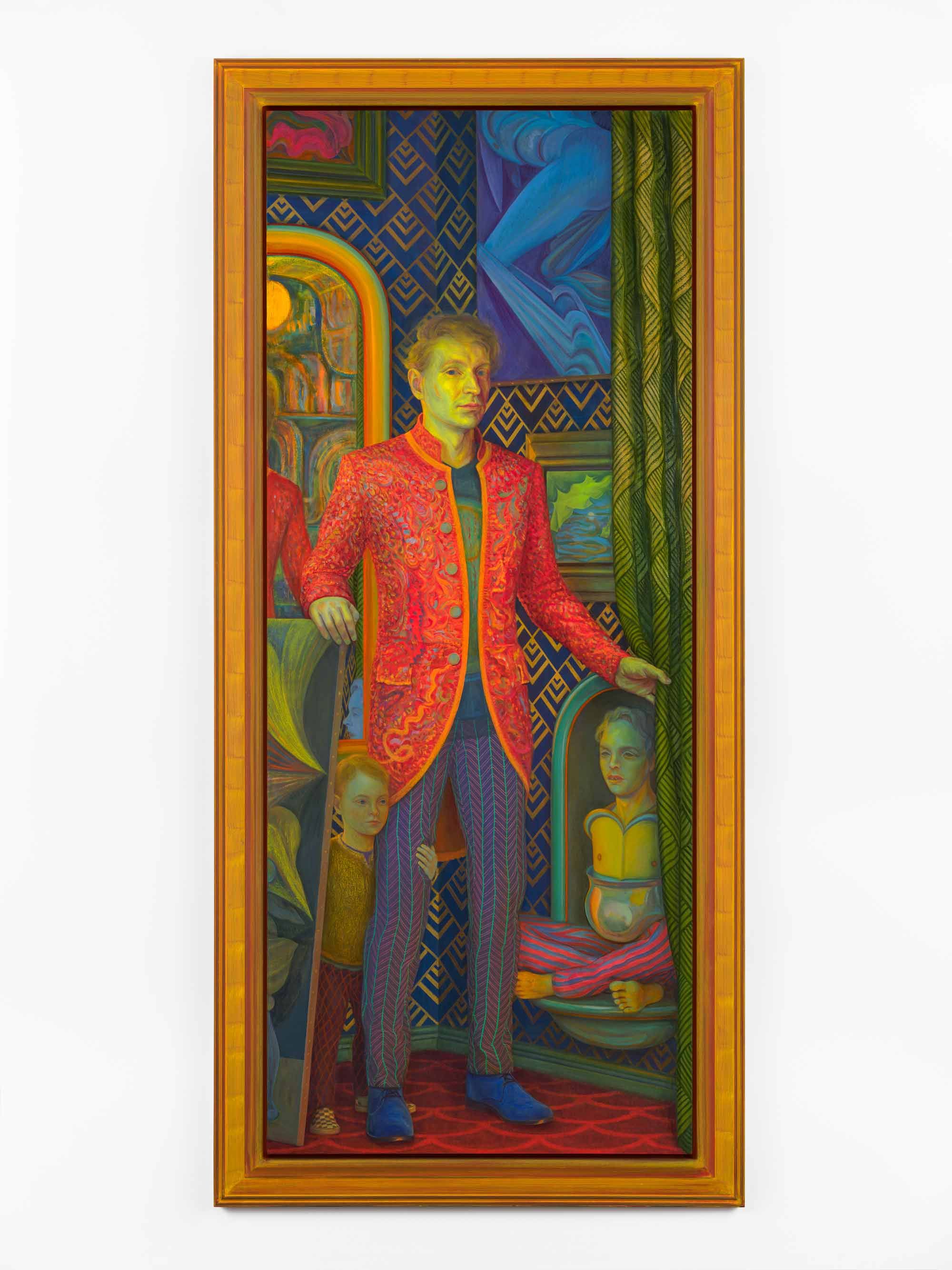
Such meta-pictorial moments recur throughout Shearer’s work, where paintings begin to refer to other paintings, images remembering other images. It is like an endless hall of mirrors in which forms keep encountering distorted versions of themselves. One of the clearest examples appears in The Late Dioramist and Sons (2020). The title proposes a lineage, although one of the sons is plainly not human. The dioramist pulls back a curtain while in his other hand he rests his hand on a painting, as if both acts, revealing and making, were on equal footing. To our left stands his son, living and apparently breathing. To our right, another figure that resembles an animatronic double, as if the category of “son” had been split in two. This work has also entered the family tree, though the logic of that tree no longer seems strictly biological. In a sense, this painting provides a model for the work’s broader logic of recursion: Shearer’s paintings feel shadowed by the afterlives of other images, a system in which images generate their own doubles and keep them circulating, slightly out of phase and out of sync, carrying their own recessive traits.
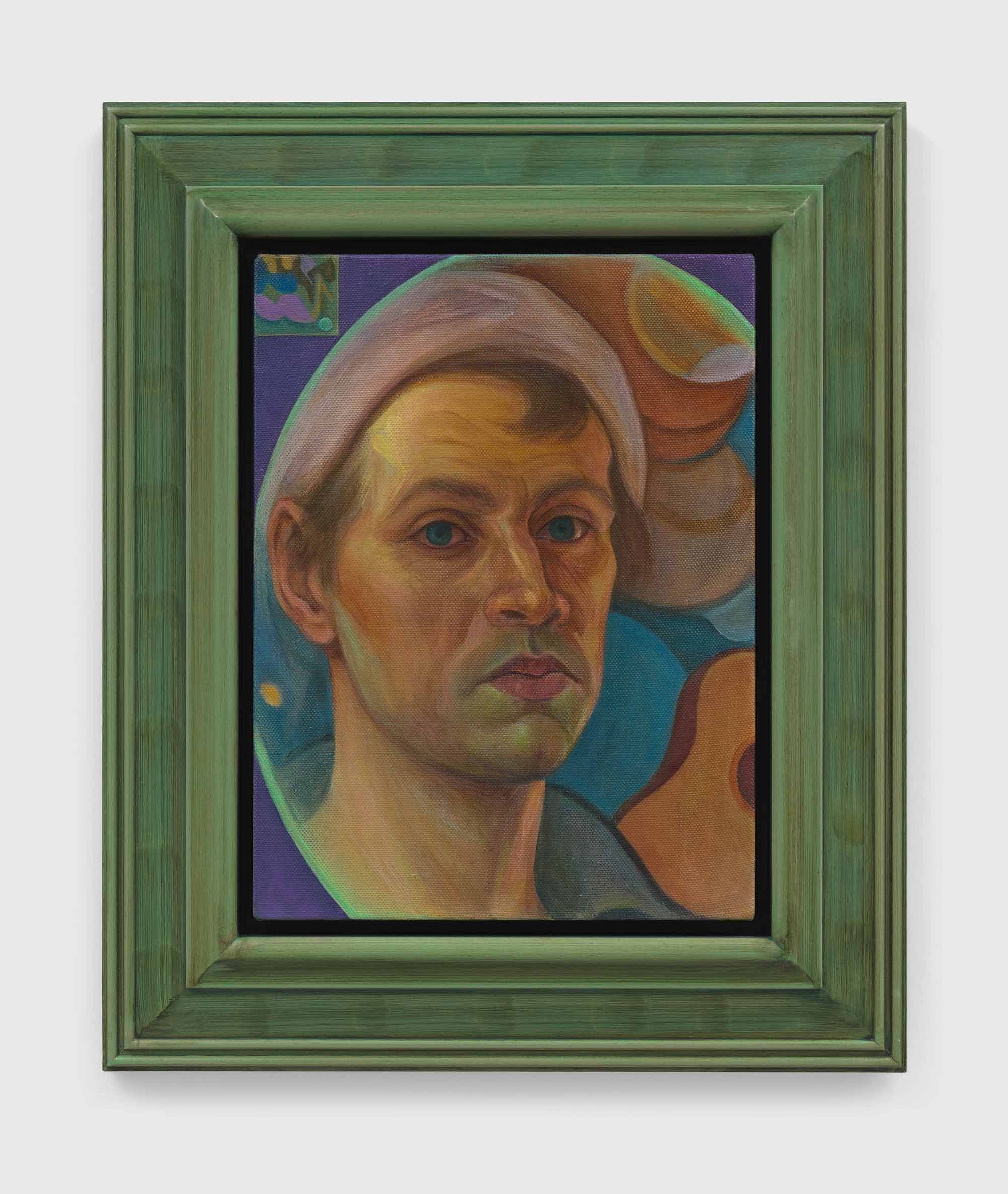
The same idea shows up in Shearer’s subjects, many of whom seem to carry traces of earlier historical types and ways of appearing. These traits begin to feel like forms of haunting and survival. The art historian Aby Warburg called this condition Nachleben, the afterlife of forms: the strange persistence by which images survive their historical moment and return under altered conditions. Shearer has described something similar in relation to subcultures, which he sees as offering unexpected links to the past: “I think some contemporary subcultures can offer a kind of phrenological shortcut back to different epochs and their manners of appearance.” I found myself thinking about this while looking at PoCo Rococo—PoCo being shorthand for Port Coquitlam, the suburb where Shearer grew up—as though the painting were fusing local memory with a distant art historical style into the same inherited gesture. Nearby, hung Acquaintance, which looked suspiciously like a straighter-haired, rounder-nosed version of the same character. The title proposes a casual social relation, but the resemblance is difficult to ignore. In Shearer’s paintings, acquaintances have a way of turning out to be family.
One way to think about these paintings is as a self-reflexive group of images, each speaking to the others and drawing attention to its own surface condition, something close to what the art historian Victor Stoichita has described in relation to early modern painting’s awareness of its own pictorial status. For Stoichita, framing, mirrors, doubles, and other staging devices—particularly in depictions of artists’ studios—disclose how painting is constructed, turning the image back on the conditions of making, viewing, and the production of pictorial sense. Shearer repeatedly uses these pictorial motifs as well, but the paintings also intermittently disclose their own construction through subtle instabilities of colour and texture, as though the work were revealing the symptoms of an inherited condition.
Inbreeding can’t be good for the bloodline. Shearer knows this. The effects of this degeneracy register most visibly on the skin, where lesions and wrinkles read as symptomatic marks. Some figures appear burdened by their genealogy. Flesh seems irritated and inflamed. Discolorations gradually spread across faces. Abrasions erupt in odd places. Especially in the case of the fallen-angel punk, The Wizzer, the figure seems to be rotting from within, as though something dormant deep in the family tree had resurfaced. Skin becomes unusually luminous in these paintings despite the suggestion of rot, especially in a work like Tokerman: abrasions visible with every line, marked by tonal shifts where blue slips into beige. Moving from canvas to canvas, these conditions begin to feel hereditary, variations of a shared pictorial logic. They may disappear for a generation, only to return elsewhere in altered form. This is where Shearer departs from Stoichita. What Stoichita describes remains at the level of painting's self-reflexivity, whereas in Shearer’s work the logic shifts toward transmission, with surface condition beginning to behave like a form of inheritance.
History surrounds these paintings, though “history” may not be the right word for what circulates within these works. When Shearer and I were talking about technique, we inevitably ended up on art history, and at a certain point, he mentioned a passage about the painting of skin that he could no longer quite place. He was thinking about the peculiar stillness of Leonardo Da Vinci’s figures: the way a single body seems to arrive at equilibrium by embodying both sexes at once, rendered through such subtle tonal gradations that it appears suspended among “rotting mists of midtones.” Neither of us could remember the origin of the line. It may have originated from the Symbolist reception of Leonardo, or from some later account of it. Regardless, the phrase stayed with me afterwards. It described a condition in which modelling starts to resemble decay, and where the image begins to feel as though it is slowly thinking itself into dissolution. It is a useful description of Shearer’s own figures, whose lesions and discolorations often appear as evidence of a type of symptomatic affliction, as though some illness were passing through them.
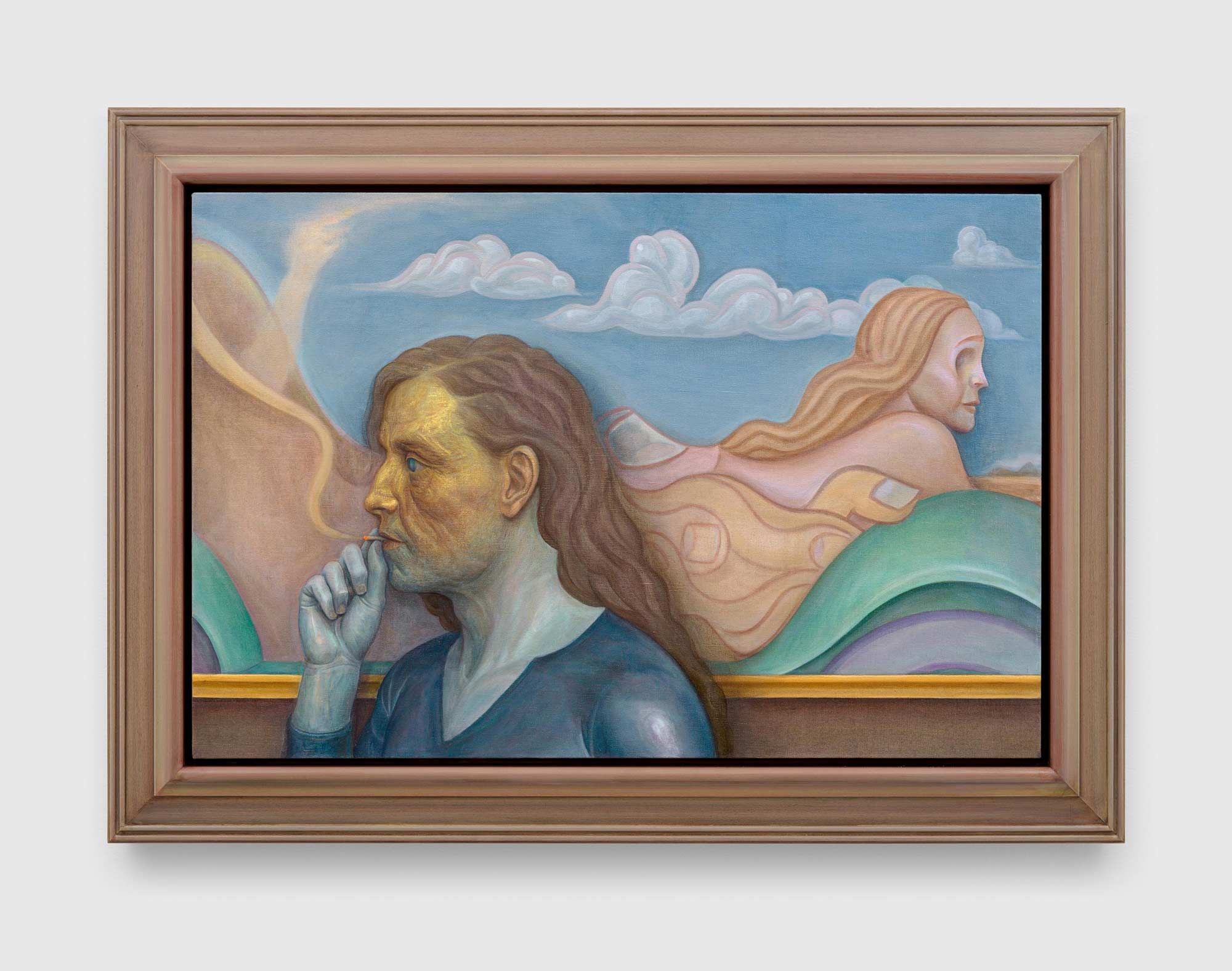
It is worth pausing here to acknowledge the obvious. These paintings are extraordinarily well-made.
It is difficult to look at these new paintings without thinking of the old masters. At least, I found it difficult not to, though I also knew this was partly a habit of looking that precedes the work itself. Shearer’s work shares a confidence that has become increasingly rare: a willingness to devote prolonged stretches of time and skill to the construction of a face and gesture. These paintings belong to that long tradition of artists for whom the human figure remains an inexhaustible problem. Like the old masters, Shearer arrives there through the slow, cumulative reworking of images. A sketch becomes a painting, a photograph, an iPad study, then returns again through further revisions. This recursive loop intersects with an ongoing accumulation of faces, expressions, and gestures drawn from found photography, internet subcultures, digital editing software, and, more recently, artificial intelligence. Images are gathered, stored, recombined, sketched, painted, and repainted. Faces pass through systems that generate near-endless variations from a single source. The search for a usable face or expression follows the logic of automimesis, each image emerging from another that had already acquired a strange reproductive momentum.
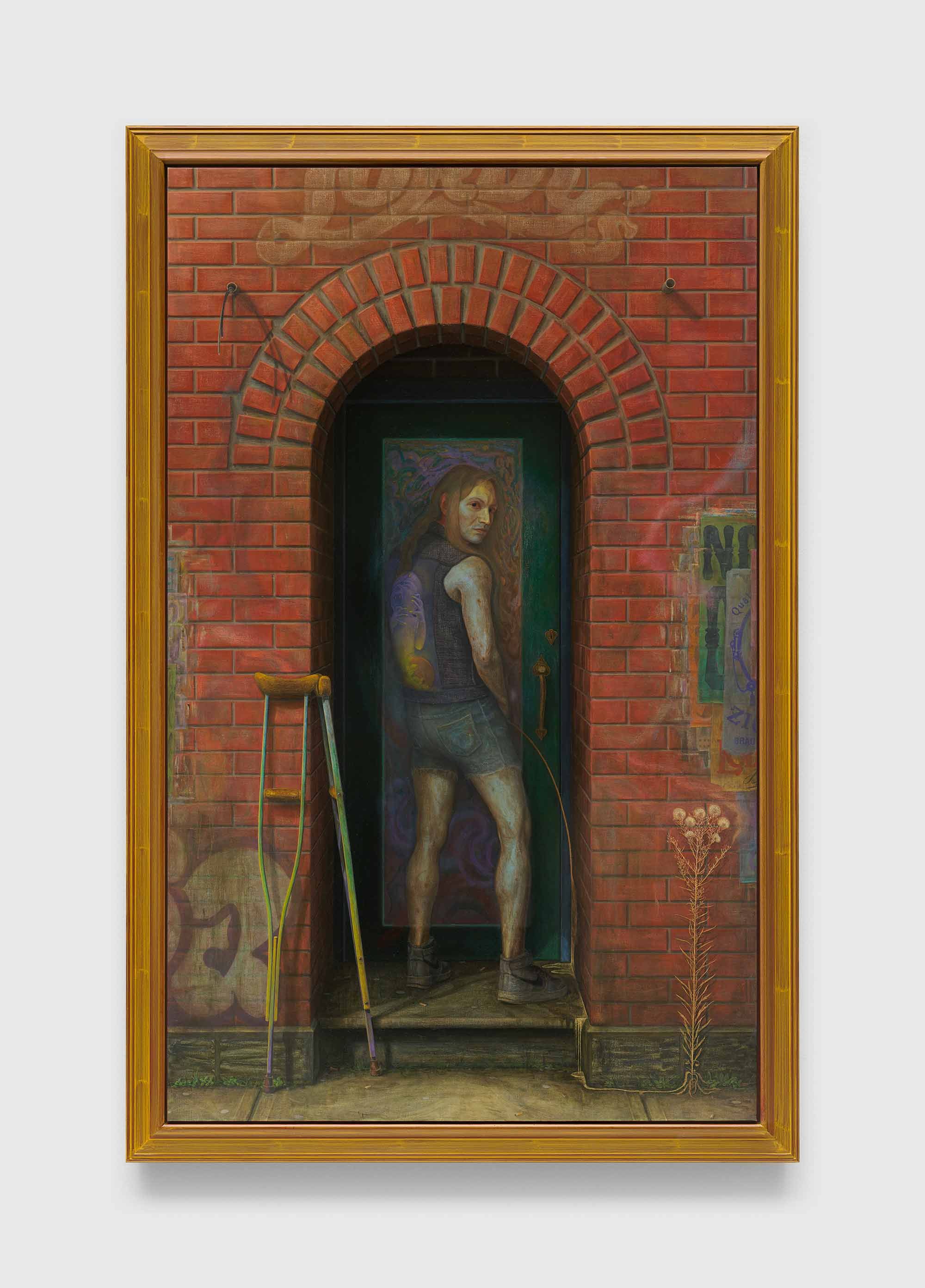
The Wizzer gathers many of the tendencies. A long-haired punk stands beneath a narrow brick archway, occupying a shallow pictorial space reminiscent of older religious painting. Shearer drew on sources as varied as Botticelli’s The Outcast (c. 1496), Cabanel’s The Fallen Angel (1847), and a depiction of Old Age from the Romance of the Rose (c. 1490-1500), all images of expulsion and abandonment. Their iconography persists in the figure’s obstinate bearing. His gangrenous flesh recalls the decomposing bodies of martyrs and ascetics, while the crutches beneath his arms resemble damaged wings. Beside him, a stream of urine runs down the brick wall, zigzagging toward a dandelion pushing through a crack at the base of the archway. The eye follows it as one follows a crack spreading across ice. By the time it reaches the plant, the scene feels strangely petrified, dried into place. However, the dandelion alone seems to resist this stasis. Its roots resemble legs, its stems raised hands, as if caught mid-gesture in an arrested dance. It sits at the terminus of this visual genealogy, the latest mutation in the afterlife of forms.
Perhaps this is what gives the paintings their peculiar strangeness. One leaves the studio with the sense that the paintings know one another, that they belong to the same family tree. The word remained in my notebook long after the visit. Inbred. It seemed to describe the strange sensation that every face in the room had somehow come from every other face.