DEFORMATIONS
An interview with Susanna Berger
In the seventeenth century, at the very moment the Catholic Church sought renewed doctrinal clarity—the period known as the Counter Reformation—artists became newly fascinated with images that refused immediate legibility: anamorphic frescoes that dissolved into abstraction, perspectival corridors that distorted space, illusionistic architectures that depended upon a single “correct” viewpoint. In her new book, The Deformation: Attention and Discernment in Catholic Reformation Art and Architecture (Princeton University Press, 2025), art historian Susanna Berger examines these strange visual forms—not as marginal curiosities, but as aesthetic effects central to the theological, optical, and political imagination of the Catholic world.
Moving between Minim convents, Jesuit churches, Roman palazzos, and the writings of theorists, mathematicians, and theologians, this extraordinary book shows how deformation became a means of directing attention and staging revelation. Effects editors Christopher Page and Orlando Reade spoke to Berger about obscurity and persuasion, the pedagogical function of wonder, and the persistent Baroque fantasy that truth might emerge only from the proper vantage point.
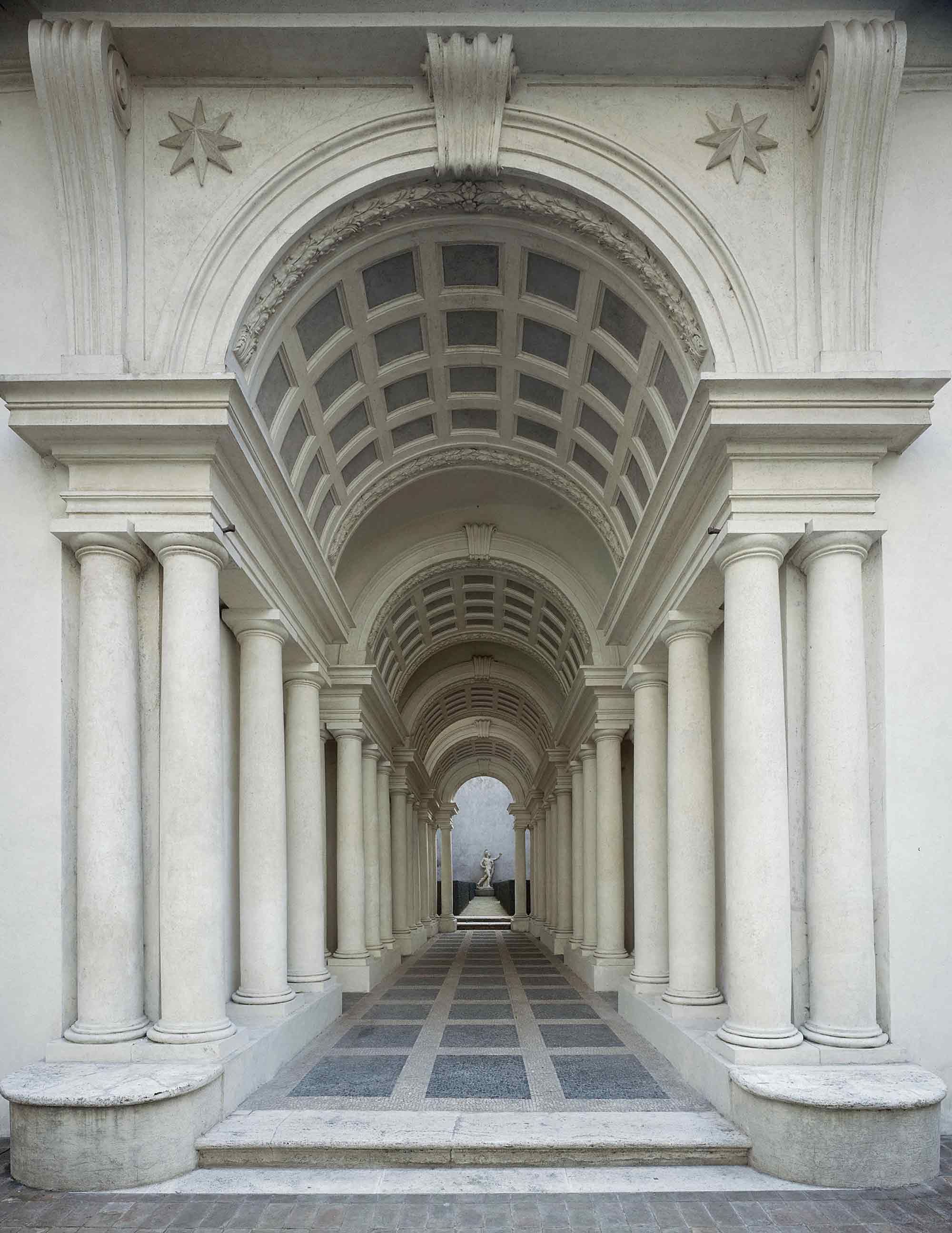
Orlando Reade: Susanna, you may not remember this, but a few years ago, you were visiting London, and we went for a walk along the Regents Canal. In something resembling a philosophical dialogue, you asked us—an artist and a writer—why contemporary art was no longer concerned with beauty. We tried to answer you: I seem to recall that Chris said that many contemporary artists were concerned with the rejection of conventional norms for political reasons, and I said that contemporary artists were more interested in being “interesting” than beautiful. Later I felt that we had not been successful in persuading you that relinquishing the pursuit of beauty was worthwhile. Now you’ve written a book that explores an earlier departure from beauty. How did you arrive at this subject?
Susanna Berger: I remember our walk very fondly—and also that fun conversation! We could say, perhaps, that a beautiful work is one that conforms to ideals. So if I am correct to argue that deformations depart from ideals (not necessarily to challenge them, but at least to ask how we perceive or value them), then yes, my new book could be said to address earlier departures from beauty (among other ideals). I really wanted, in this new project, to move away from earlier work I had done on philosophical images that were designed to transmit knowledge. After writing for several years about seventeenth-century, European visual modes of easing understanding, I grew curious about how images and architectures thwart understanding. I wanted to make sense of how artists and patrons in the Catholic Reformation engaged with visual distortions or—in period terms—“deformations”, works of art and architecture that were designed to be visually incomprehensible, at least on first perception.
Christopher Page: Your book offers a fascinating account of a number of buildings, paintings and sculptures which carry out “deformations” of established ideals and forms. Can you introduce us to the kinds of artworks you focus on in the book? Was there one church or painting that sparked your enquiry?
SB: I didn’t realize that I had written a book about “deformations”, until I reread the manuscript after it had gone through peer review. I had initially conceived of the study as a project to understand the history of attention and how visual discernment was theorized in this period as a category of knowledge—which I would approach through a series of deliberately incomprehensible artworks and buildings created over the course of the seventeenth century. I was initially fascinated with anamorphoses, images deliberately constructed to appear incomprehensible and resolving into comprehensible shapes only when observed from precise vantage points or when reflected from suitable mirrors—and in particular with the massive anamorphic corridors in the Minim convent of Trinità dei Monti in Rome. In writing the book, and in trying to escape my earlier research, I was gradually drawn (intuitively, as opposed to consciously) to the practice of deformation understood more broadly, with some chapters describing works, such as anamorphoses, that were explicitly so labeled—and celebrated or denounced accordingly—while others address artistic theory and practice that relate to deformation implicitly and mainly in experiential terms.
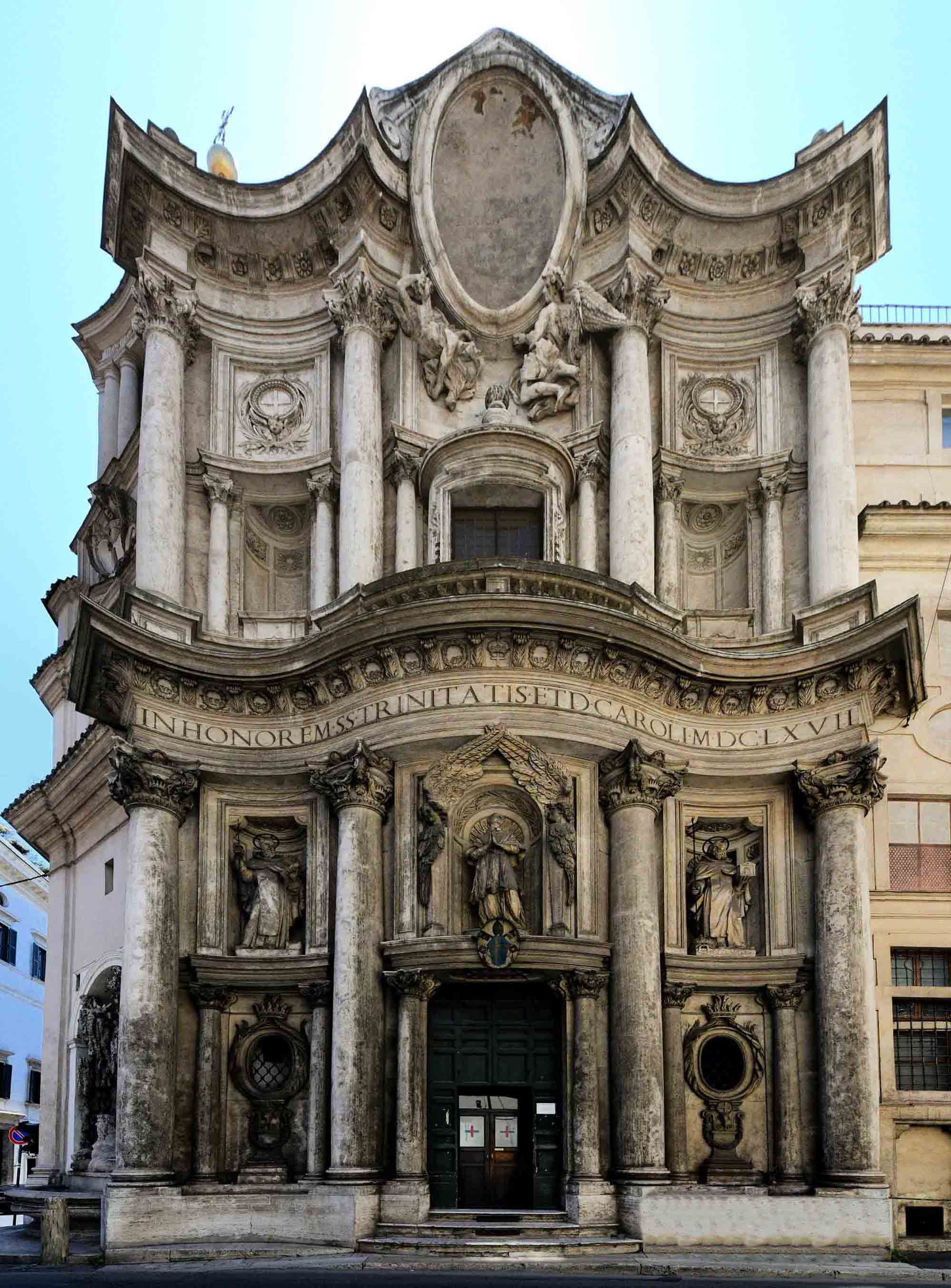
The book’s introduction, which I wrote last, opens with a consideration of Borromini's San Carlo alle Quattro Fontane in Rome. We are fortunate to have for this church a rare surviving contemporary comment, in this case noted by the biographer Giovanni Pietro Bellori, who described San Carlo as both “ugly and deformed”, in the margins of a book by Giovanni Baglione. Bellori and others objected to San Carlo because they believed it violated norms of classical architecture and, in the process, cast aside the classical ideal of clarity. The book’s first chapter then focuses on the patron Cardinal Bernardino Spada and the artwork and architectural features he commissioned for his palace in Rome, including his famous perspectival colonnade. In writing that chapter, I was interested in understanding how Spada used deformation as a means to gain social power in a secular setting by anticipating how guests would move throughout his palace, directing them first through an experience of confusion and then ultimately to understanding. In chapters 2, 3, and 4, I study how members of the Minim order and the Society of Jesus integrated deformations into both educational and devotional practices. These are the chapters that most directly investigate how Minims and Jesuits used anamorphoses to conceptualize attention and discernment. Whereas the first four chapters explore Catholic Reformation thinkers who intentionally created and studied visual and spatial deformations, chapter 5 considers the Spanish theologian Juan Caramuel y Lobkowitz, whose work I use to suggest that at least one Catholic Reformation theorist could have been drawn to deformation inadvertently: Caramuel devised recommendations he claimed would generate architecture “with grace, and without deformity”. Yet some architectural theorists read Caramuel’s recommendations as promoting deformations rather than reforming architecture. Finally, chapter 6 considers turned ivories, small-scale works crafted by cutting material into a form while rotating it in a lathe. Although turned ivories were not described in the early modern era as “deformations”, understanding or interpreting a turned ivory involved operations of the mind similar to those necessitated by the images and structures that were identified as such. I suggest that the transcendent incomprehensibility of turned ivories prolongs—perhaps infinitely—the time it takes to move from not-knowing to knowing.
CP: As a painter I’ve long been fascinated with anamorphic paintings too, but until reading your book I hadn’t fully appreciated how these extraordinary works emerged in a context in which visual discernment was a prized skill, and one bound up with the Catholic Church. Let’s take one of the enormous frescos at the Trinità dei Monti: depending where you stand in the corridor, the painting is either totally incomprehensible—what we moderns might call abstract—or it magically coheres into an image of St. Francis of Paola, who, not coincidentally, was believed to have miraculously regained his sight. Did a painting like this teach viewers how to see, or did it teach them that they cannot see without guidance?
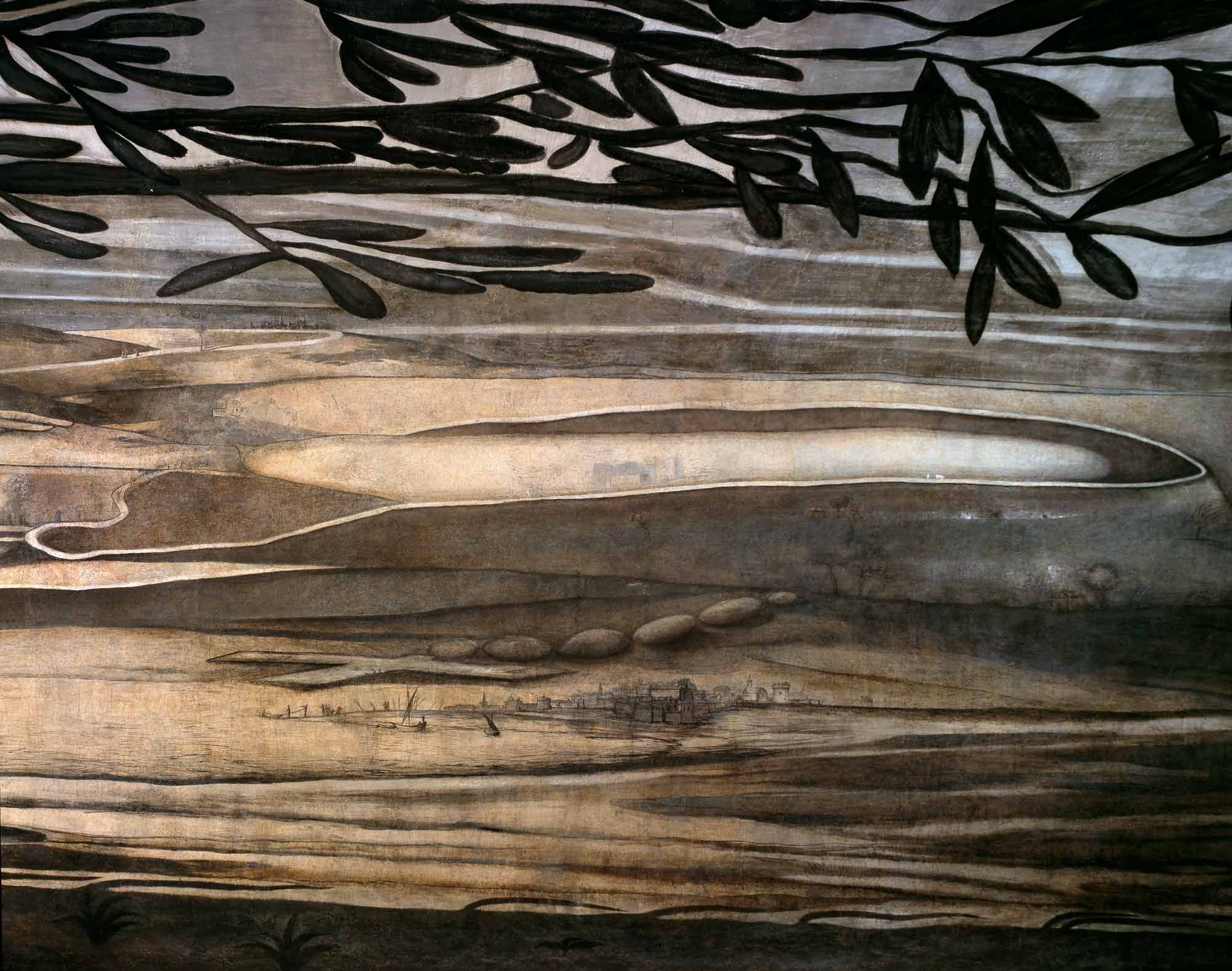
SB: The Trinità dei Monti fresco is actually even more ingenious than that description allows: as you move along the corridor, you experience the fresco as a transition from one coherent image to incoherence, and then to a second relatively coherent image. When approaching the composition from the left, observers first find an oversized bearded St. Francis of Paola beneath an olive tree. As they traverse the corridor, moving north along the painted wall, the likeness of the saint grows illegible. As those observers’ vantage point changes further, the saint seems to be replaced by a bird’s-eye perspective on a rural and maritime scene, featuring tiny sailing and fishing boats, villages, bell towers, and a range of different small figures. Not all elements from the representation of Saint Francis transform into landscape elements, even when the landscape is observed head-on. Notably, the saint’s cross and prayer beads remain fully visible from the northern end of the corridor, so that as observers cross in front of the fresco toward the northern side of the space, they must negotiate between one image, a landscape, in which the cross and prayer beads are incongruous, and a prior image, of St. Francis, in which the cross and prayer beads make sense. If from a northern vantage point, the fresco does not turn into a fully controllable image, from the far southern end of the corridor, the portrait of Saint Francis appears more unified, as the landscape details are too small to intrude. This and other similar frescoes would have immersed Minims and visitors who walked along the corridor in successive states of perceptual confusion and then comparative clarity, as they observed at first a clear image that seemed to deform into chaos just as another, more coherent (though not perfectly coherent) one came into view.
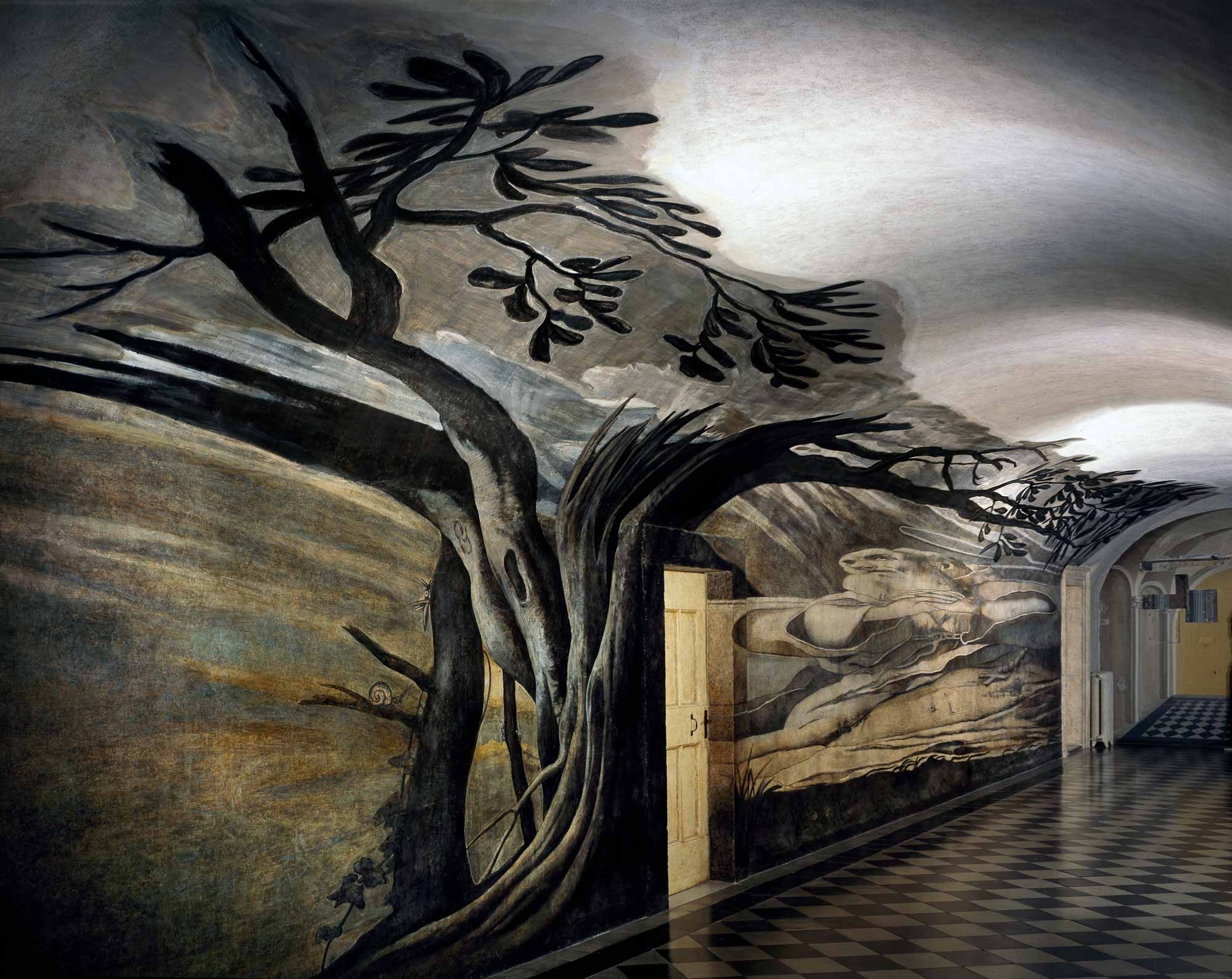
Now to get to your question of what the fresco teaches observers: I would say that both of your suggestions are correct. The fresco invites observers to pay attention as they walk through the space—and to notice how a change in vantage point shifts appearances. The succession of images reminds observers that they can take both literal and metaphorical steps to “see better”, to improve their understanding, and the fresco’s illusionism creates a mode of interpretation in which the body’s movement in space helps the mind and spirit to approach understanding. In addition, the repeated experience of deformations reformed conveyed a message about God’s command over vision and revelation. Indirectly, the fresco—as an artwork created for the Minim order—further communicates the mediating role of the Church and its leaders, here Minim friars, in guiding the faithful toward truth. A Minim friar paints a fresco in which he effectively shows the observer how to see, so that the person “guided by the order” moves from clarity to obscurity to relative clarity. I don’t make this point in the book, but that the cross and the rosary persist—they do not morph as do other elements of the image—could suggest further that the church (and its holy objects, representing the sacraments in which humans approach God) will be present to guide vision in any scenario.
OR: These works were created in a period that you refer to as the “Catholic Reformation”, and which (as you tell us) German Lutheran historians in the eighteenth century called the “Counter Reformation”. As a literary scholar, I’m often inclined to look for the way that political or theological conflicts inform aesthetic innovations. Were there things happening in Italy or the Catholic Church more generally—i.e. doctrinal debates or ecclesiastical politics—that helped to inspire these deformations?
SB: Yes! Thank you so much for this question. In the early modern era, the notion of reformation was generally conceived of in relation to a prior deformation. And to write of deformations in this period calls attention to the overlapping implications of deformation and reformation in artistic and religious domains. If today the Reformation label commonly is commonly understood to refer to early modern Protestantism, reformatio was also, in the seventeenth century, associated with Catholic endeavors to reform religious practice, and had been part of Church discussions for centuries before Luther. In ecclesiastical writings, reformatio generally signifies corrective action, proposed with acute self-awareness by ecclesiastical leaders who sought to return clerical conduct to the moral and doctrinal purity of the primitive Church. In the early modern period, whether Luther was seen to have led a “reformation” that would bring his followers closer to salvation or a “deformation” that would turn them away from God hinged on what observers made of his protests against the papacy and the Catholic Church. The artistic plays on forming, deforming, and reforming that I consider in my book—which can be found in church architecture, in the gardens, libraries, and corridors of palaces and convents, and in printed books and pedagogical materials—were created and perceived in a context in which questions about the Church’s ideal form (and relatedly whether it had been deformed, if it should be reformed, and if so how) developed into dominant cultural concerns.
A good example of the interrelations between the aesthetic and religious processes of forming, deforming, and reforming can be found in writings on optical devices by the seventeenth-century Italian philosopher and mathematician Mario Bettini. Bettini hints that the anamorphic images his book teaches readers how to make model one Church leader’s gift of “pastoral foresight”. As he and his readers undertake “optic reformations”—use columnar mirrors to rearrange images of distended eyes or roses—so does Cardinal Colonna reform the souls and procedures of the Bolognese Church. Bettini’s description of Colonna’s “reforming” actions underlies, in part, my argument that Minims and Jesuits conceived of anamorphoses as actualized allegories representing the Church as mediator, pointing the faithful to God, helping to shed light on God’s expectations of the faithful and to see God’s nature more clearly. As experimenters in optics started with a deformed and confusing image and ended with a well-proportioned or reformed representation, Catholic Church leaders of the period began from distortions or deformations—identified, or generated, by Protestants or other reformers—and hoped to correct these in the mirror of the Catholic Reformation. I conclude that we might even see the Council of Trent itself as a vast anamorphic operation.
CP: The various deformations you discuss never seem to arrive at a state of complete transparency. Even when the observer reaches the correct vantage point, something remains unresolved, ambiguous, or difficult to assimilate. You argue that some of these works functioned as technologies of revelation, bolstering the mediating role of the Catholic Church and the exceptional status of patrons, whereas others keep viewers in a state of confusion indefinitely. Do you think, ultimately, that deformations reveal something about the limits of revelation itself? Might the persistence of obscurity—even at the moment of understanding—complicate the very forms of authority these works were designed to reinforce? Could the need for such elaborate technologies of revelation itself suggest a growing awareness that truth was not wholly transparent, even to those who claimed to possess it?
SB: Thank you for this wonderful question as well. It makes me think of an inscription on one of the anamorphic wall frescoes in Trinità dei Monti that highlights the ubiquity of deceptions: “WITHOUT DECEPTION WE ARE DECEIVED” (CITRA DOLUM FALLIMUR). That text posits that to reach the truth, we must accept and move through the stage of deception and its concomitant confusion and uncertainty. It also hints that unless we know how deceptions are produced, we will be deceived. And yes, many deformations—like San Carlo, where we began our conversation—defied comprehensibility altogether in a manner that in the period was associated with the challenge of deciphering divine enigmas or of contemplating divine mystery. San Carlo’s form continued to bewilder visitors well into modern times: Leo Steinberg recounts that twelve respected scholars in the nineteenth and twentieth centuries would examine San Carlo and provide twelve distinct rationales supposedly underlying its forms. Contemporary understanding allowed for the possibility that even as some confusion yielded to understanding, further truths or mysteries remained beyond human comprehension.
We have a fascinating seventeenth-century description of how visitors to San Carlo responded to the church, written by a friar named Juan di San Bonaventura. He suggests that the building put observers in touch with something transcendent (as angels might experience when contemplating the Holy Spirit in heaven), in an experience that defies articulation in language—observers were unable “to say anything for a while”—and evokes confusion, even stupefaction or intellectual bafflement, insofar as its form “seems to suspend [observers’] intellect”. We see, then, in response to certain works, an intoxicating mental paralysis in which observers could not explain what they experienced. And in the existence of deformations like San Carlo that resist resolution into clarity, we find that practitioners and observers of deformation saw as productive not simply that resolution, but also the confusion itself—that is, the confusion emerging from the space created between ideal form and deformation, productive insofar as it encouraged observers to slow down, look, and pay attention. Practitioners of deformations saw these works as offering access to a model of spiritual persuasion that mimicked the limits on human perception when confronting the divine. I don't see these unresolving deformations as necessarily undermining the authorities they were designed to reinforce, because authority was not understood to depend on delivering perfect transparency and resolving all mysteries. Even where confusion persists, the deformations’ capacity to stun and to elicit wonder heightened emotional affect and guided observers in what was understood to be the right direction: a structure like San Carlo might clarify that some mysteries remain beyond human comprehension.